Early Modern Trans Studies is a research cluster and collective that comprises and serves scholars from the United States, United Kingdom, Ireland, and Canada who are invested in trans studies as a methodology for early and premodern studies. In addition to annual research symposia for established and early career scholars, EMoTrans has hosted targeted subfield conferences with topics including: Early Modern Trans Drama, Middleton & Dekker’s The Roaring Girl, Queer Theory & Sexuality Studies, & Disability & Health Humanities. EMoTrans also holds professional development events for junior scholars and graduate students, including an ongoing series of archive workshops with the Newberry Library in Chicago (2025-2027).
Although the early modern period has long been a rich subject area for studies of gender, race, and sexuality, the field of Early Modern Trans Studies has emerged in the last several years as differentiated from earlier feminist, gender studies, and queer theory approaches. As such, it emphasizes the transhistorical politicization of certain kinds of bodies and the biopolitical machinery of state- and church-endorsed sex and gender categories.
#EMoTrans
While EMoTrans is not housed in any one institution and does not have a formalized roster of membership, current event organizing and planning committee(s) include: Colby Gordon (Bryn Mawr College), Simone Chess (Wayne State University), Sawyer Kemp (Queens College, CUNY), Miles Grier (CUNY Graduate Center), and Ari Friedlander (University of Mississippi).
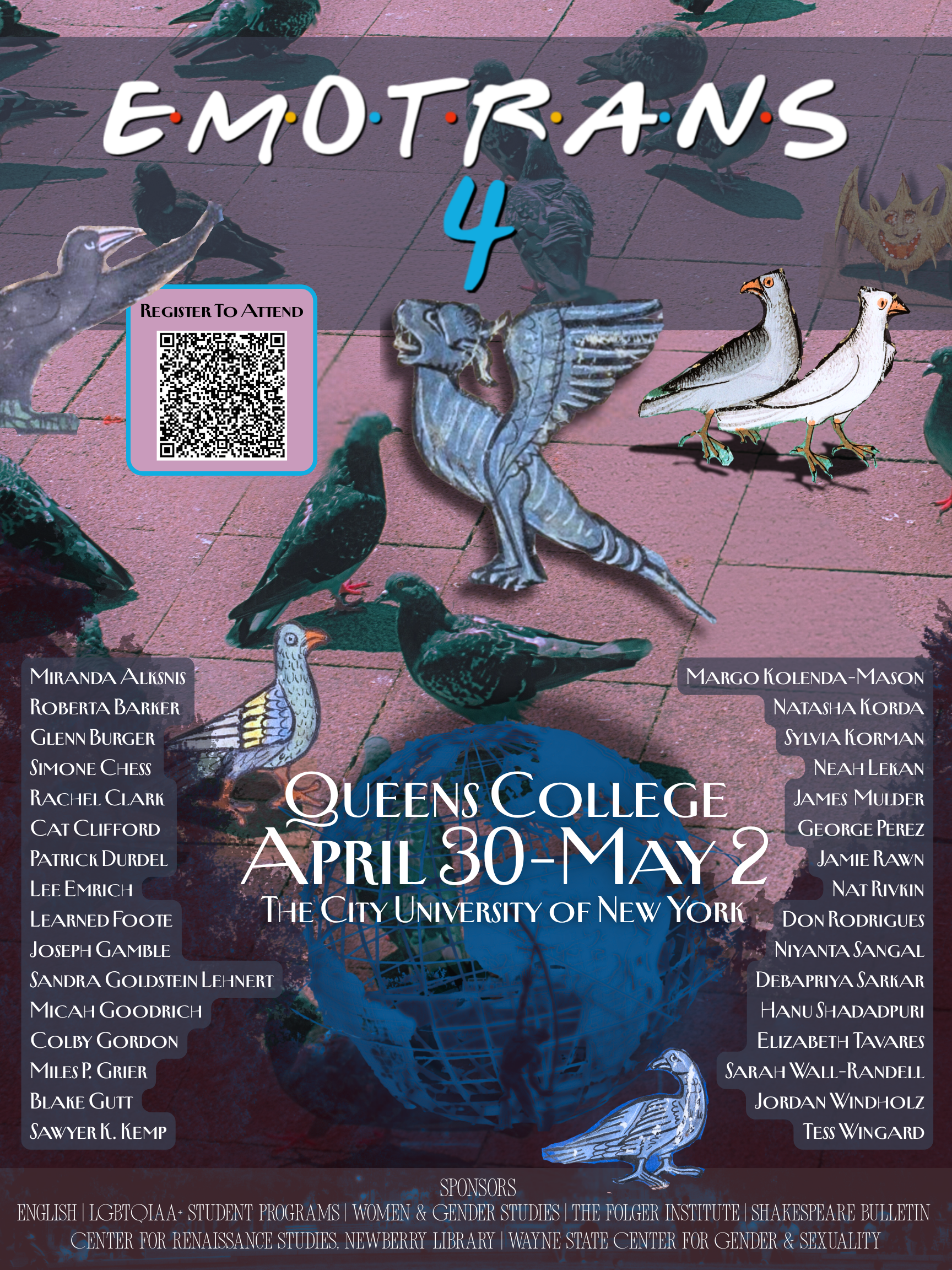
Early Modern
Trans Studies 4
May 2026; Queens College, CUNY
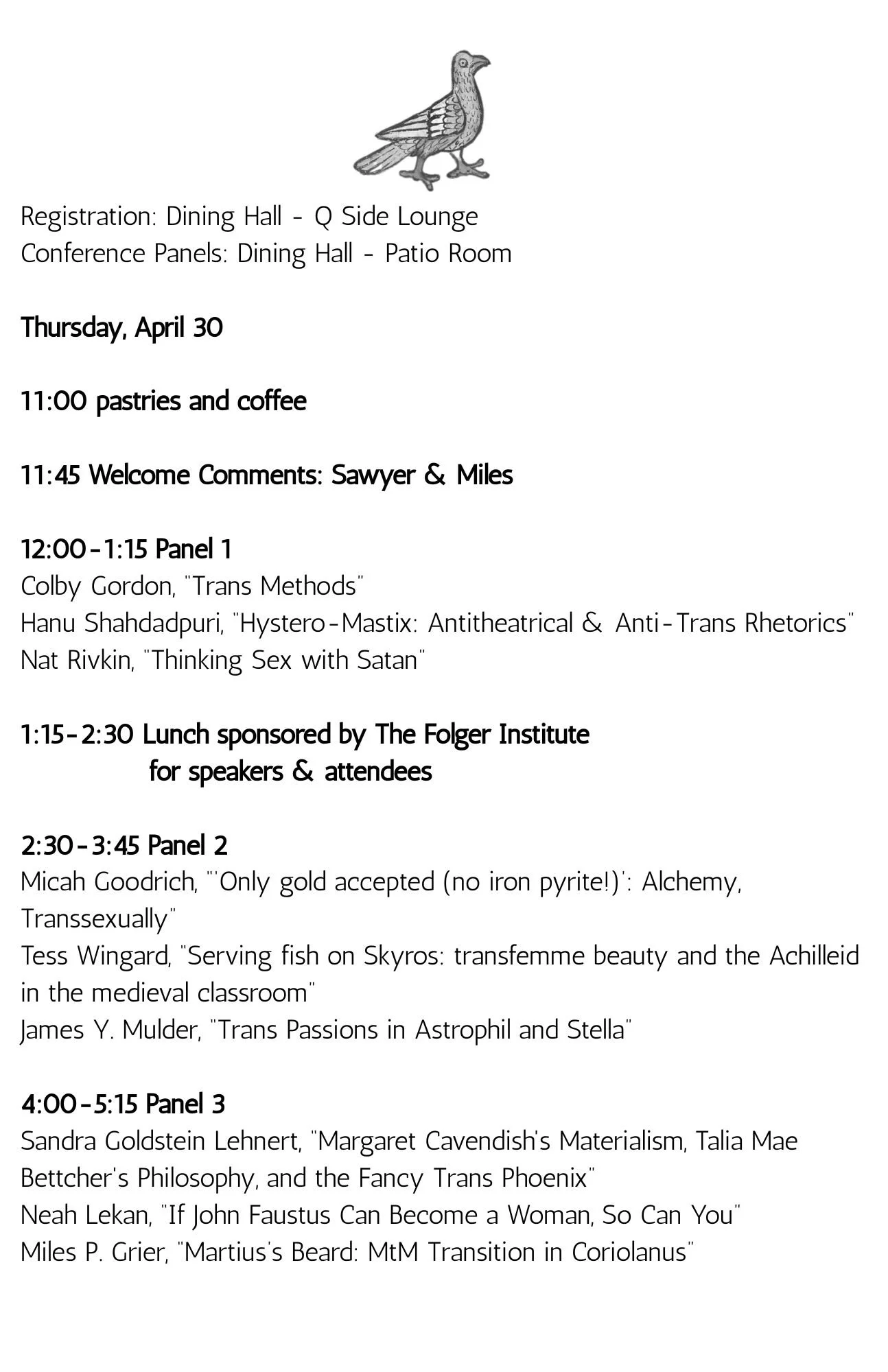
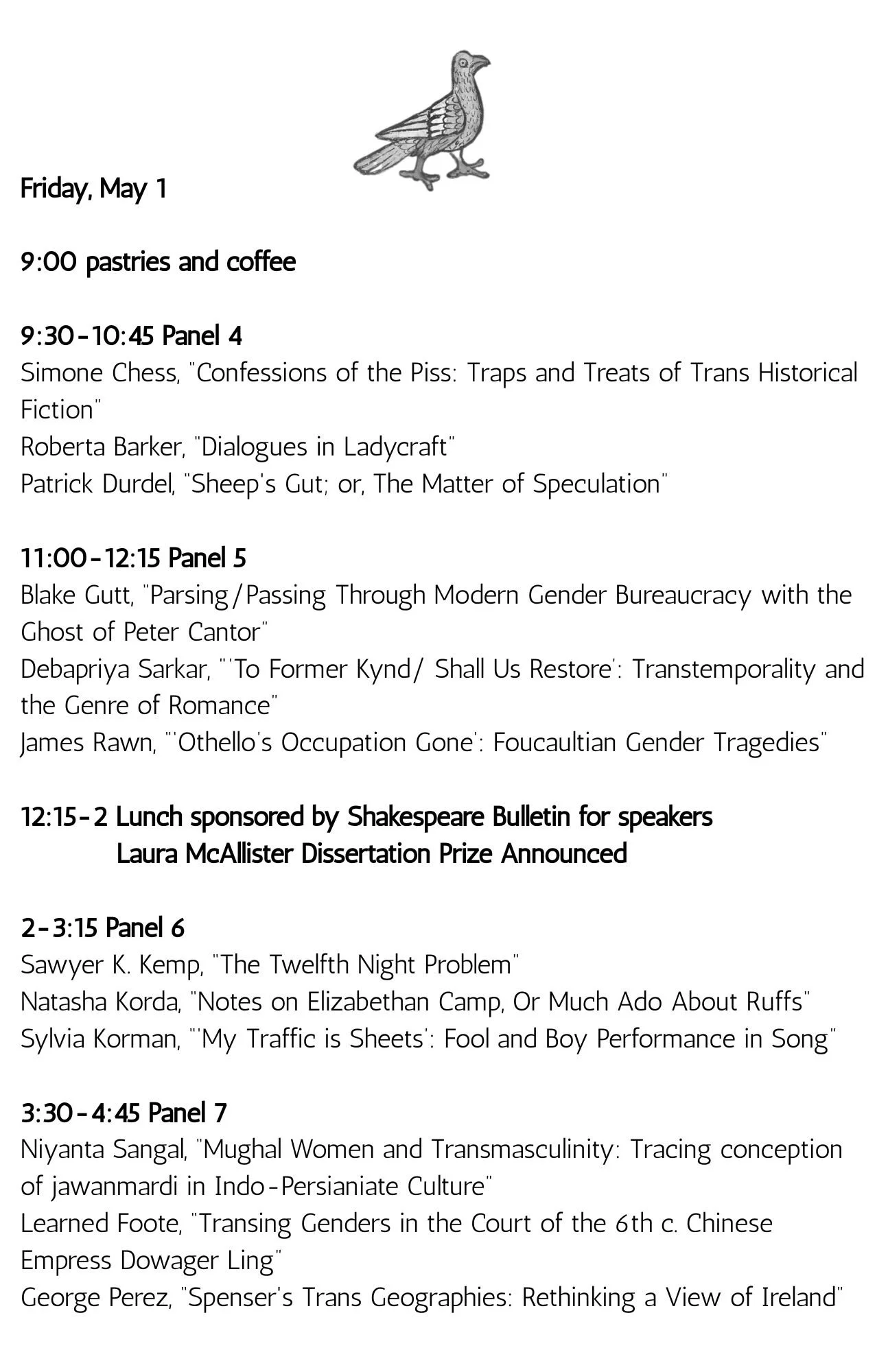
Schedule
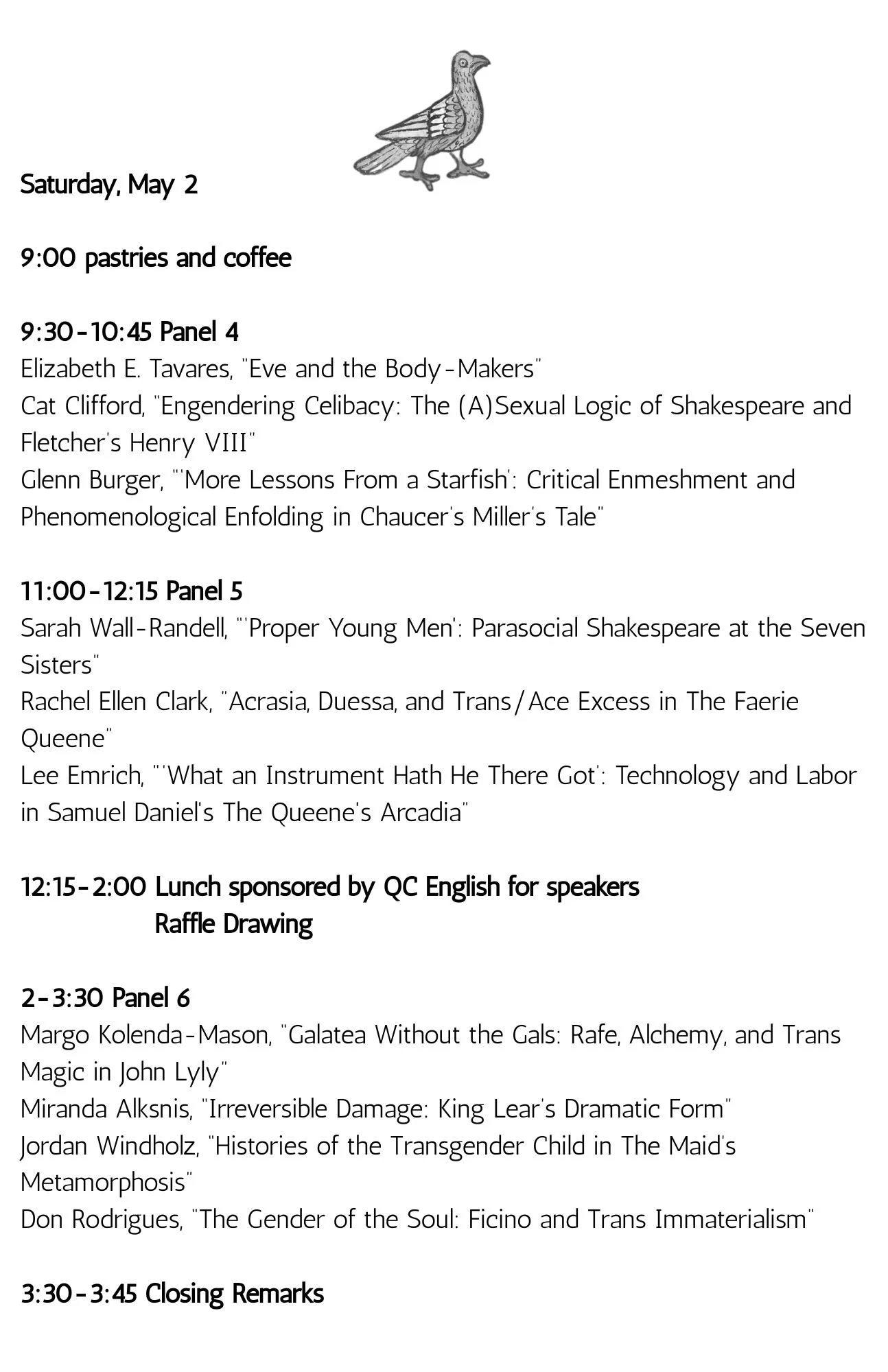
Information
Conference Location:
All of our proceedings will take place in the Patio Room and Q-Side Lounge in the Dining Hall Building at Queens College. A map of campus is available here.
Travel Support for Newberry & Folger Consortium members:
We are excited and grateful to share that we have secured co-sponsorship from both the Folger Institute and the Newberry Center for Renaissance Studies. What this means on a practical level is that if your institution is part of one of their consortiums, you may be eligible for conference travel support. If you are in the Newberry Consortium, contact your institution representative for the consortium to see if there is funding through that mechanism (every university handles this differently). If you are at a Folger consortium institution, they offer support to graduate students and early career scholars on a case-by-case basis. If you are yourself a graduate student or early career scholar at a Folger consortium institution, or if you know a graduate student from a Folger consortium institution who is planning to come to this conference, please contact one of us organizers so we can coordinate these requests with the Folger.
Hotel:
While the discounted hotel block is reserved for conference presenters, we recommend the Marco LaGuardia Hotel and Suites, located in downtown Flushing, Queens. Flushing is known for its wide variety of delicious Chinese and east Asian cuisines. Two nearby buses run to Queens College's campus, each taking approximately 20 minutes. The Q25 brings you the closest to the campus entrance. The Q17 is a fine alternative that would drop you two blocks from campus. A car service can bring you to campus within 11 minutes.
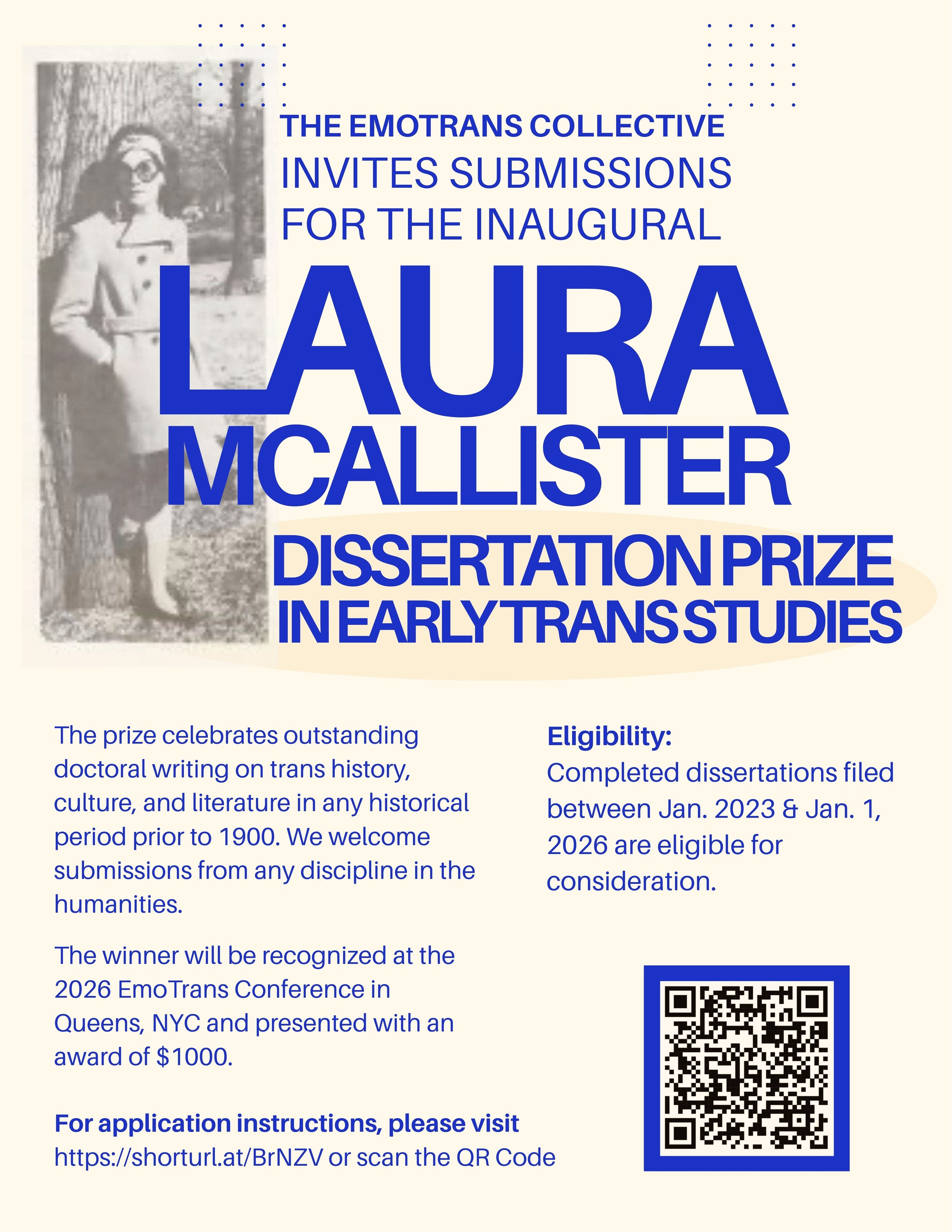
The Laura McAllister Dissertation Prize
The EmoTrans Collective invites submissions for the inaugural dissertation prize in Early Trans Studies. The prize celebrates outstanding doctoral writing on trans history, culture, and literature in any historical period prior to 1900. We welcome submissions from any discipline in the humanities. The winner will be recognized at the 2026 EmoTrans Conference in Queens, NYC and presented with an award of $1000.
Eligibility: Completed dissertations filed between Jan. 2023 and Jan. 1, 2026 are eligible for consideration.
About Laura McAllister
The Laura McAllister Prize in Early Trans Studies honors one of our own, a scholar who was publishing in early modern trans studies long before the field could be recognized as such. Rediscovered and recognized by Simone Chess in her archival research, McAllister was a founding editor of and occasional contributor to DRAG Magazine (also published as DRAG Queens: A Magazine about the Transvestite) from 1971-1973. We are especially indebted to her for her “Hold the Curtain, Juliet’s Shaving: Shakespeare’s Boy Actresses” (DRAG Vol. 2 No. 7, 1972). Laura McAllister's bio for the journal reads: "Miss McAllister is a young college professor in a large midwestern university. She is also studying for her master’s Degree in English Literature and therefore knows her ‘stuff’… Laura is a heterosexual transvestite and will soon become the husband of a young lady she met while attending a drag ball in New York City.”
We do not know who Laura McAllister was before, after, or outside of her time working with the magazine, and we do not know if she continued to work as a college professor after her marriage and departure from DRAG. We wish we could have known her and learned more from her, and we hope she sees us using her work as part of ours, now, in premodern trans studies. With this award, we seek to remember her contributions and to make it a little bit easier for young scholars who know their stuff to be recognized and celebrated.
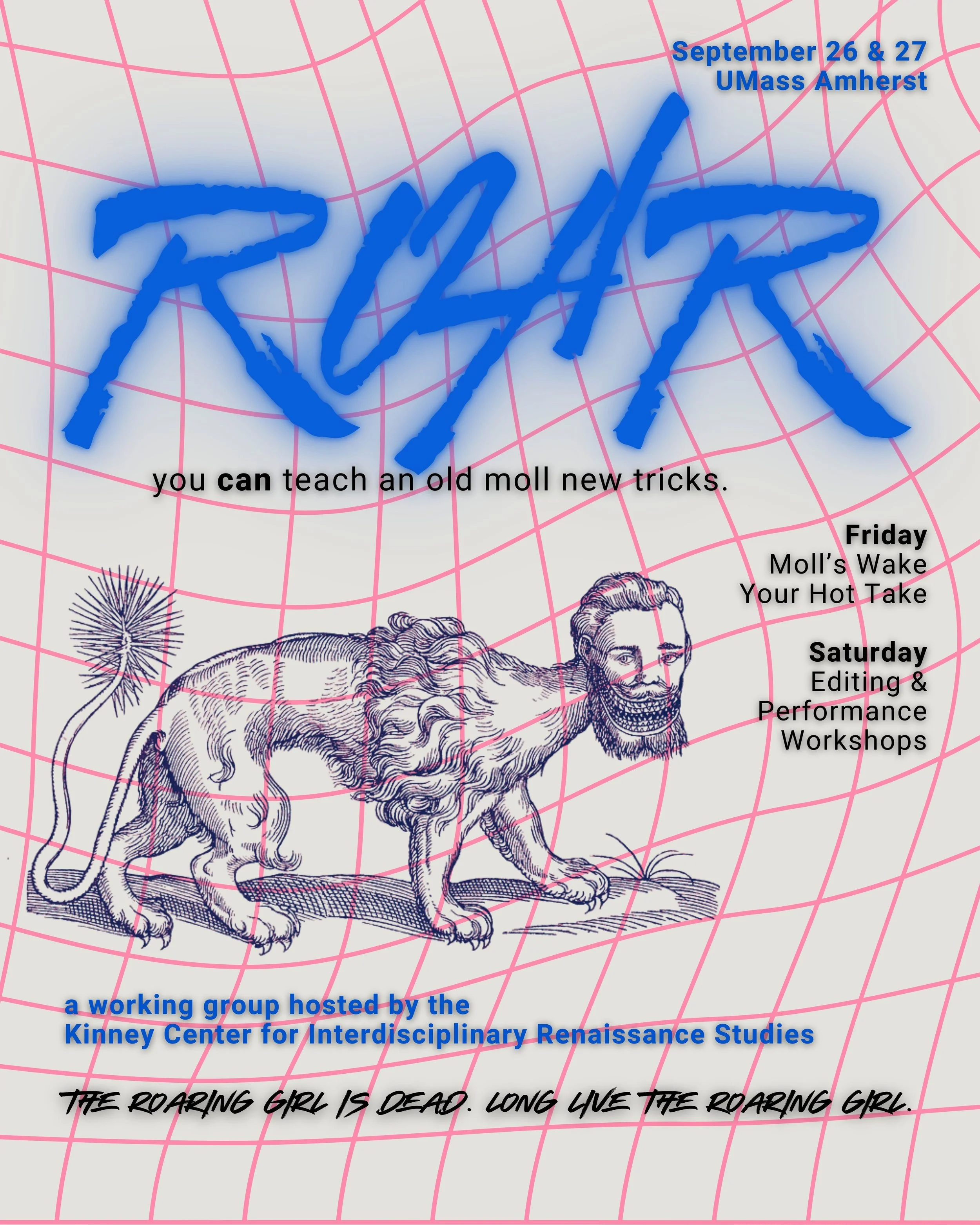
ROAR.
September 26 & 27, 2025; UMass Amherst.
The Roaring Girl is dead. Long live the Roaring Girl.
This two-day working group event will be organized around a series of provocations about Dekker and Middleton’s The Roaring Girl.
What do we think of this play these days? Or, why haven’t we been thinking about it? Has this play past its prime for gender, queer, and trans studies? Are there tools we need or interventions we’d want to make as scholars, actors, editors, and dramaturges that we don’t currently have in place, but should? What might make this play sit up and Roar again?
ROAR will be a series of experiments, explorations & workshops that will transpire over two days of collaborative thinking.
Early Modern Trans Studies Presents:
Trans Sexualities
November 8 & 9, 2024
EMoTrans has a lot of events on the books for 2024/25!
This fall, we are trying something new with a seminar-style incubator for new works! This seminar invites scholars from many pre-modern subfields and institutions across the country to meet and share works-in-progress on the theme of Trans Sexualities.
Several public events will be offered as part of this exciting program— see poster for details and to RSVP for the lunch.
